
Introduction
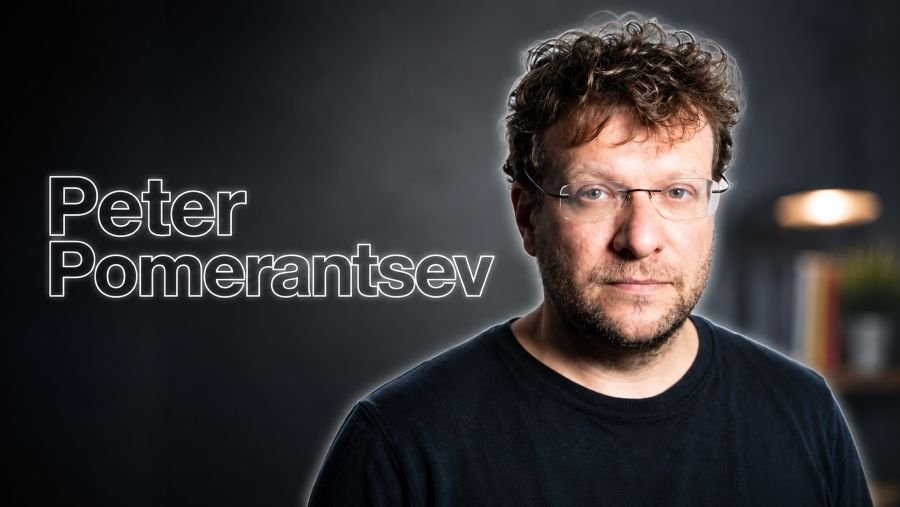
Peter Pomerantsev is a Ukrainian-born, England-raised writer, journalist and researcher known for explaining propaganda, disinformation and the way modern media can influence politics and society.
He first gained wide attention through his writing about Russia and his experience working in Moscow television. Later, his work expanded to include digital misinformation, authoritarianism, democracy and information warfare.
Today, he is a Senior Fellow at the SNF Agora Institute at Johns Hopkins University, where he co-directs the Arena Initiative. His research examines how propaganda and polarization work and how democratic societies can respond to them.
He is also known for books including Nothing Is True and Everything Is Possible, This Is Not Propaganda, and How to Win an Information War. His work combines personal experience, history, journalism and research in a way that makes difficult political subjects easier to understand.
Who Is Peter Pomerantsev?
Peter Pomerantsev is a British writer and journalist of Ukrainian origin who specializes in propaganda, media and political communication.
He was born in Kyiv in 1977 and later grew up mainly in England. The Royal Society of Literature describes him as a Ukrainian-born, England-raised nonfiction author.
His professional life has moved through several different fields. He has worked in television, documentary production, journalism, books and academic research.
These different experiences are important because he does not study propaganda only from a theoretical point of view. He also spent years working inside the Russian media environment.
That experience later became an important foundation for his books and research.
Peter Pomerantsev Quick Facts
| Fact | Details |
|---|---|
| Full Name | Peter Pomerantsev |
| Born | 1977 |
| Birthplace | Kyiv, then Ukrainian SSR, Soviet Union |
| Background | Ukrainian-born, England-raised |
| Profession | Writer, journalist and researcher |
| Known For | Research and books about propaganda and disinformation |
| Current Role | Senior Fellow at the SNF Agora Institute |
| Institution | Johns Hopkins University |
| Research Project | Arena Initiative |
| First Major Book | Nothing Is True and Everything Is Possible |
| Other Major Books | This Is Not Propaganda, How to Win an Information War |
| Major Literary Honour | RSL Ondaatje Prize |
| RSL Fellowship | Elected in 2021 |
Current institutional and literary roles are confirmed by Johns Hopkins University and the Royal Society of Literature.
Early Life and Family Background
Pomerantsev was born in Kyiv during the Soviet period.
His father, Igor Pomerantsev, is a writer, poet and broadcaster who faced persecution from Soviet authorities. The family left the Soviet Union when Peter was still very young and later lived in Western Europe before settling in Britain.
As a result, he grew up with a strong connection to different cultures and political systems.
His family history also exposed him to questions about censorship, freedom of expression and state power from an early stage of life.
Later, these same subjects became central themes in his professional work.
Education and Move Into Television
Pomerantsev studied English Literature and German at the University of Edinburgh before entering the media world. After university, he moved to Russia and also studied filmmaking in Moscow.
During this period, he did not begin as a famous political writer.
Instead, he worked in television.
That experience gave him an unusual view of the Russian media system from inside the industry.
In an interview about his career, he explained that after university and film school, he worked as a television producer in Moscow. This period later helped him understand how entertainment, politics and carefully controlled narratives could mix together.
Peter Pomerantsev’s Television Career in Moscow
Pomerantsev spent several years working in Russian television.
At first, television was simply his profession. However, over time he began noticing how the country’s media environment was changing.
Russia’s television industry offered entertainment, reality programmes and factual content, but the wider media system was also becoming closely connected with political messaging.
His position inside that environment gave him material that would later shape his writing.
Instead of explaining Russian propaganda only through government speeches or political theory, he could describe what media production actually felt like from behind the scenes.
This made his first book especially distinctive.
Breakthrough With Nothing Is True and Everything Is Possible
His first major book, Nothing Is True and Everything Is Possible, brought his work to a much larger international audience.
The nonfiction book explores modern Russia through people, television, politics and unusual personal stories.
It also examines a society where media narratives can change quickly and where separating performance from political reality can become difficult.
The book became a major success for its author and won the 2016 Royal Society of Literature Ondaatje Prize. It was also shortlisted for the Guardian First Book Award and the Gordon Burn Prize and longlisted for the Samuel Johnson Prize.
That success established him as an important writer on modern Russia and political communication.
This Is Not Propaganda
His second major book, This Is Not Propaganda: Adventures in the War Against Reality, expanded the discussion beyond Russia.
Instead of looking at only one country’s media system, the book explores a broader international struggle over truth, political identity, technology and manipulation.
The subject became increasingly important as social media platforms changed how information could travel across borders.
False or misleading stories no longer needed a traditional television station or newspaper to reach millions of people.
They could spread online within minutes.
This Is Not Propaganda later won the Gordon Burn Prize, adding another important literary honour to his career. The Royal Society of Literature confirms both this award and the Ondaatje Prize received by his first book.
How to Win an Information War
In 2024, Pomerantsev published How to Win an Information War: The Propagandist Who Outwitted Hitler.
The book looks at the story of Sefton Delmer, a journalist who became involved in British propaganda efforts against Nazi Germany during the Second World War.
However, the book is not only about history.
Pomerantsev connects Delmer’s experience with modern questions about propaganda, authoritarianism and Russia’s war against Ukraine.
The book therefore combines history with a discussion about one of today’s most difficult political problems: how can a society communicate effectively with people who have been surrounded by powerful propaganda?
PublicAffairs describes the work as nonfiction and says it connects Delmer’s wartime experience with the author’s search for ways to understand and challenge modern disinformation.
Research on Propaganda and Disinformation
Propaganda is now one of the main subjects associated with Pomerantsev’s career.
However, his work goes further than simply identifying false information.
He studies why people believe certain stories, how identity affects the information people trust, and why correcting one false claim may not always change a person’s wider beliefs.
This is especially important in the internet age.
Modern information campaigns can use social networks, emotional messages, videos, influencers, political groups and traditional media at the same time.
Therefore, understanding propaganda requires more than checking whether a single sentence is true or false.
Readers interested in political discussion, free speech and how societies handle disagreement can also read about Teresa Bejan, an Oxford political theorist whose work examines civility, toleration and political debate.
Peter Pomerantsev at Johns Hopkins University
As of August 2026, Pomerantsev is a Senior Fellow at the SNF Agora Institute at Johns Hopkins University.
He co-directs the Arena Initiative.
According to his official Johns Hopkins University profile, his research areas include authoritarianism, global democracy, disinformation and propaganda, media and technology, political institutions, and national security.
The Arena Initiative studies ways to understand and respond to problems created by digital-era disinformation and political polarization.
This position connects his earlier television experience and journalism with academic research.
It also shows how his career has changed over time.
He started by observing media culture from inside television. Today, he studies information systems on a much wider international level.
Journalism and Public Writing
Alongside his books and academic work, Pomerantsev has written for major publications.
His publisher lists outlets including Granta, The Atlantic, Financial Times, London Review of Books and Politico.
His articles often examine Russia, Ukraine, democracy, propaganda, authoritarian government and the changing media environment.
This combination of journalism and research allows him to write for both specialist and general audiences.
For readers interested in another journalist who covers government power, intelligence and national security, the DoTips profile of Shane Harris provides a useful related read.
Awards and Literary Recognition
Pomerantsev has received several important honours for his nonfiction writing.
His first book won the RSL Ondaatje Prize in 2016. The Royal Society of Literature’s official winners list confirms the award for Nothing Is True and Everything Is Possible.
His second major book, This Is Not Propaganda, won the Gordon Burn Prize.
Then, in 2021, he was elected a Fellow of the Royal Society of Literature.
These honours helped establish his reputation not only as a researcher on propaganda but also as a nonfiction writer.
Why Is Peter Pomerantsev Important?
His work matters because information has become a major part of modern political power.
Governments, political movements and other groups can now reach huge audiences without relying entirely on newspapers or television.
At the same time, people receive information from many different sources every day.
This creates opportunities for education and open discussion, but it can also make manipulation easier.
Pomerantsev’s work tries to explain that problem in understandable terms.
His unusual career gives him several viewpoints at once. He has experienced the Soviet legacy through his family, worked inside Russian television, written journalism, produced books and conducted academic research.
As a result, his work connects personal experience with larger questions about democracy and truth.
Peter Pomerantsev Books
Three books are especially important to understanding his career.
Nothing Is True and Everything Is Possible examines the strange political and media world of modern Russia and grew from his experience working there.
This Is Not Propaganda looks more widely at disinformation and the international struggle over political reality.
How to Win an Information War uses the historical story of Sefton Delmer to explore how propaganda can be challenged and what lessons history may offer today.
Together, these books show how his interests have developed from observing one media system to studying a global information problem.
Frequently Asked Questions
Who is Peter Pomerantsev?
Peter Pomerantsev is a Ukrainian-born, England-raised British writer, journalist and researcher known for studying propaganda, disinformation, Russia and modern political communication.
Where was Peter Pomerantsev born?
He was born in Kyiv in 1977, when the city was part of the Ukrainian Soviet Socialist Republic within the Soviet Union.
What is Peter Pomerantsev famous for?
He is best known for his nonfiction books about Russia, propaganda and information warfare, as well as his research into disinformation and democratic communication.
What books has Peter Pomerantsev written?
His best-known books are Nothing Is True and Everything Is Possible, This Is Not Propaganda, and How to Win an Information War.
Where does Peter Pomerantsev work?
As of August 2026, he is a Senior Fellow at the SNF Agora Institute at Johns Hopkins University and co-directs the Arena Initiative.
What does Peter Pomerantsev research?
His work includes propaganda, disinformation, authoritarianism, global democracy, media, technology and political institutions.
Did Peter Pomerantsev work in Russian television?
Yes. Before becoming widely known as an author, he spent years working in television in Moscow. His experience inside the Russian media industry later influenced his writing.
Which award did Nothing Is True and Everything Is Possible win?
The book won the Royal Society of Literature Ondaatje Prize in 2016.
Conclusion
Peter Pomerantsev has built an unusual career across television, journalism, literature and academic research.
His years working in Moscow gave him direct experience of a changing media environment. He later turned those observations into award-winning books and expanded his work to study propaganda and disinformation around the world.
Today, his research at Johns Hopkins University focuses on some of the biggest questions facing modern democracies: how people decide what to believe, how political narratives influence society, and how free societies can respond to manipulation without abandoning democratic values.
For readers asking who is Peter Pomerantsev, the simplest answer is that he is a writer, journalist and researcher best known for helping audiences understand propaganda, Russia, disinformation and the modern information war.










Leave a Reply